Admittedly, I have not been posting a hell of a lot on this site as of late, let alone posts that push the endless music marketing that flows into my inBox everyday. But this is definitely worth sharing.
Mayday have just released an EP for free download called Technology and it is damn good. Think new-album Gnarls Barkley or Outkast at their best. The stand out track on first listen is Crossroads & Avenues, a hard driving, psychedelic soul/hiphop piece that evolves into what can only be described as beatbox drum n bass. Catchy stuff that pulls no punches. Check it out.
Labels: Music, The Payola Chronicles
Friday, May 22, 2009


After a brief hiatus, the Art I Pass By series returns for the summer with this beautiful series found at Pender and Cambie.
Labels: Art, Art-I-Pass-By, Street Level
Tuesday, May 12, 2009

In adapting new mediums, there is always a period where the shape of the old form is mirrored in the new form's space. For example, an early television ad looked like this. Radio had simply repositioned itself in front of a camera. It took years for advertisers to fully realize what could be achieved on the small screen. Nearly half a century later, the highly polished 30 second spot that those early sponsor announcements had evolved into would make the jump online with little change –aside from a taking advantage of more lenient regulations– when internet video came of age. Even today, the "best" viral ads still follow the tried and true format.
In a similar pattern, the online newspaper has always adapted the traditional layout of its printed cousin. The better rags have introduced interactive components and with the onset of blogging, there has been, for better or worse , the ability for reader comments. But the overall structure has remained intact. Meanwhile, sites such as Facebook, Friend Feed, Twitter and, of course, the all-powerful RSS feed have turned our mode of consuming information from categorized columns into a constantly updating flow.
Today, the New York Times, in what is being heralded by the likes of Jay Rosen (@jayrosen_nyu) and Dave Winer (@davewiner) as a watershed moment, introduces the Times Wire, an at-a-glance view of the paper's latest content, in reverse chronological order without any other weighting or sorting. As Winer states, "They're now presenting their news flow as a flow. Gone is the pretense that news on the Internet works like news on paper. Welcome to the NY Times river of news".
RSS has been with us for 10 years now. And unlike a number of other trends and technologies, it has survived and thrived and essentially become the backbone for the current information revolution. After a decade, one might ask of the NY Times shift in format "So what?" or "Why did it take so long?". Or, to the more discerning observer, it is a moment to make note: of both the validation of the new form and the prevailing relevance of one of the older forms' greatest champions.
Labels: NY Times, Signs of Our Time
Tuesday, May 05, 2009
Thursday, April 02, 2009

Be the first on your block to own CONNECT! Marketing in the Social Media Era a book that gives 100 marketers 400 words each to discuss how social media has impacted the way that brands connect with consumers.
I had the honour of not only being a contributor but also of designing the cover which, with the help of the keen photographic eye of Leigh Peterson, turned out quite decent.
Best of all it is for a good cause: all profits will go to Susan G. Komen for the Cure foundation. So order your copy today.
Labels: Great Thinking, Literature
Wednesday, March 25, 2009

It may be the defining position that this book had in my childhood. Or it might be a result of the fact that rumours of this Spike Jonze project have been piquing my interest for what seems like half a decade. Or perhaps I have simply been caught up in the momentum of the Arcade Fire soundtrack. But it took the trailer for Where the Wild Things Are to break me out of my tumbleweed blogging silence. Enjoy.
Labels: Film, Literature
Tuesday, March 03, 2009

Simon Reynolds is an English music critic who began writing about the UK's electronic music scene for Wire Magazine back in 1992. This month is the magazine's 300th edition and to mark the occasion, the editors have released a 7-part series of Reynolds' work through the years under the title "The Hardcore Continuum" that begins by profiling Hardcore Rave and moves on through Jungle, Drum 'n' Bass and Hard Step to Grime and the Dubstep breaks of the last few years.
The series is remarkable for its immediacy, as a record of a specific time and place in a musical genre that "abolishes narrative" all the while juxtaposed with the more overarching critically theoretical approach with which Reynolds approaches his subject. As he states in the introduction, "It was only in 1999, with the sixth piece ... that I really became conscious that for several years I’d been documenting a continuum of musical culture that emerged out of the British rave scene."
Fascinating stuff. But if the above series leaves you wanting more, check out Reynolds' lecture on the Hardcore Continuum at FACT Liverpool featuring a discussion with Mark 'K-Punk' Fisher.
Labels: Music, The Hardcore Continuum
Thursday, February 26, 2009

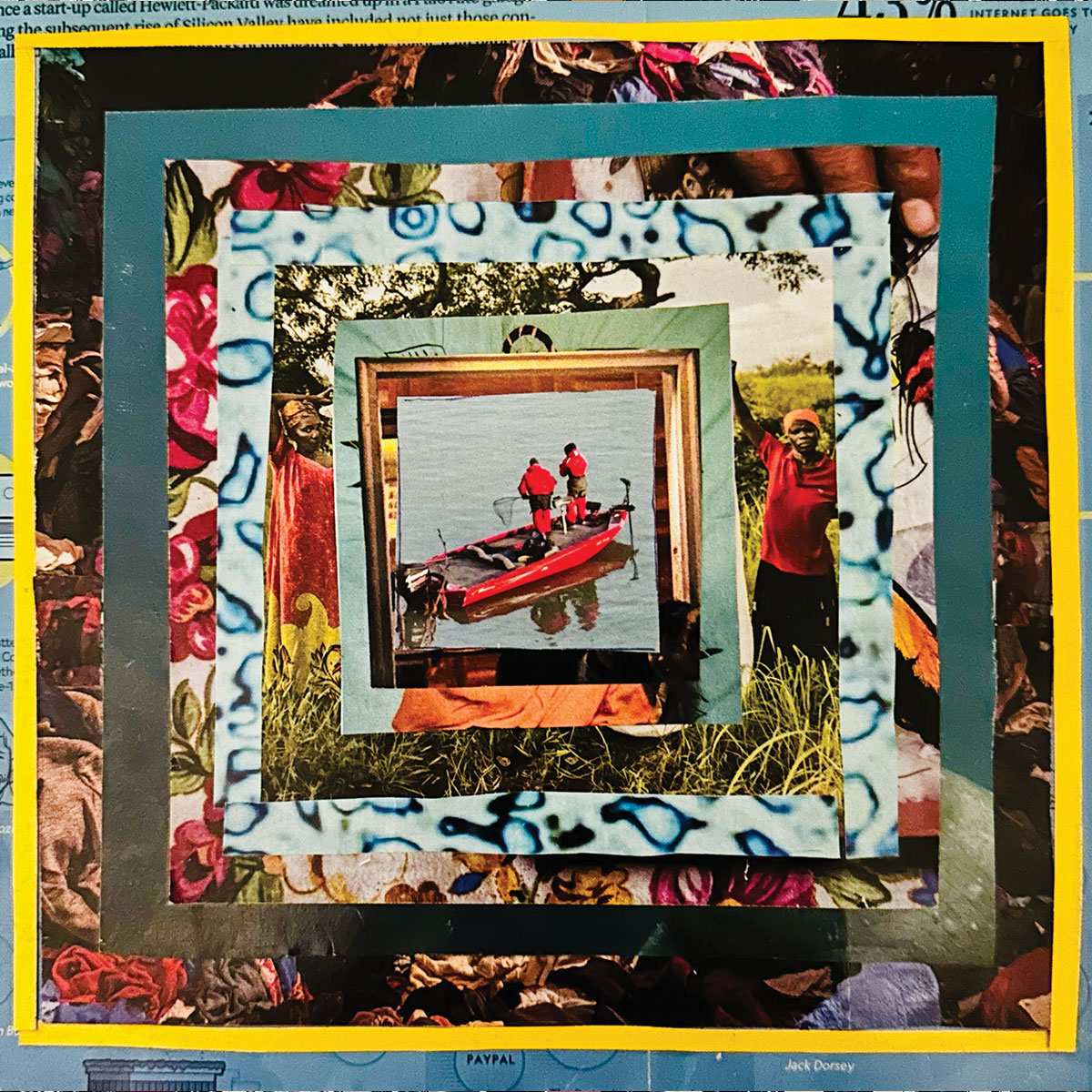
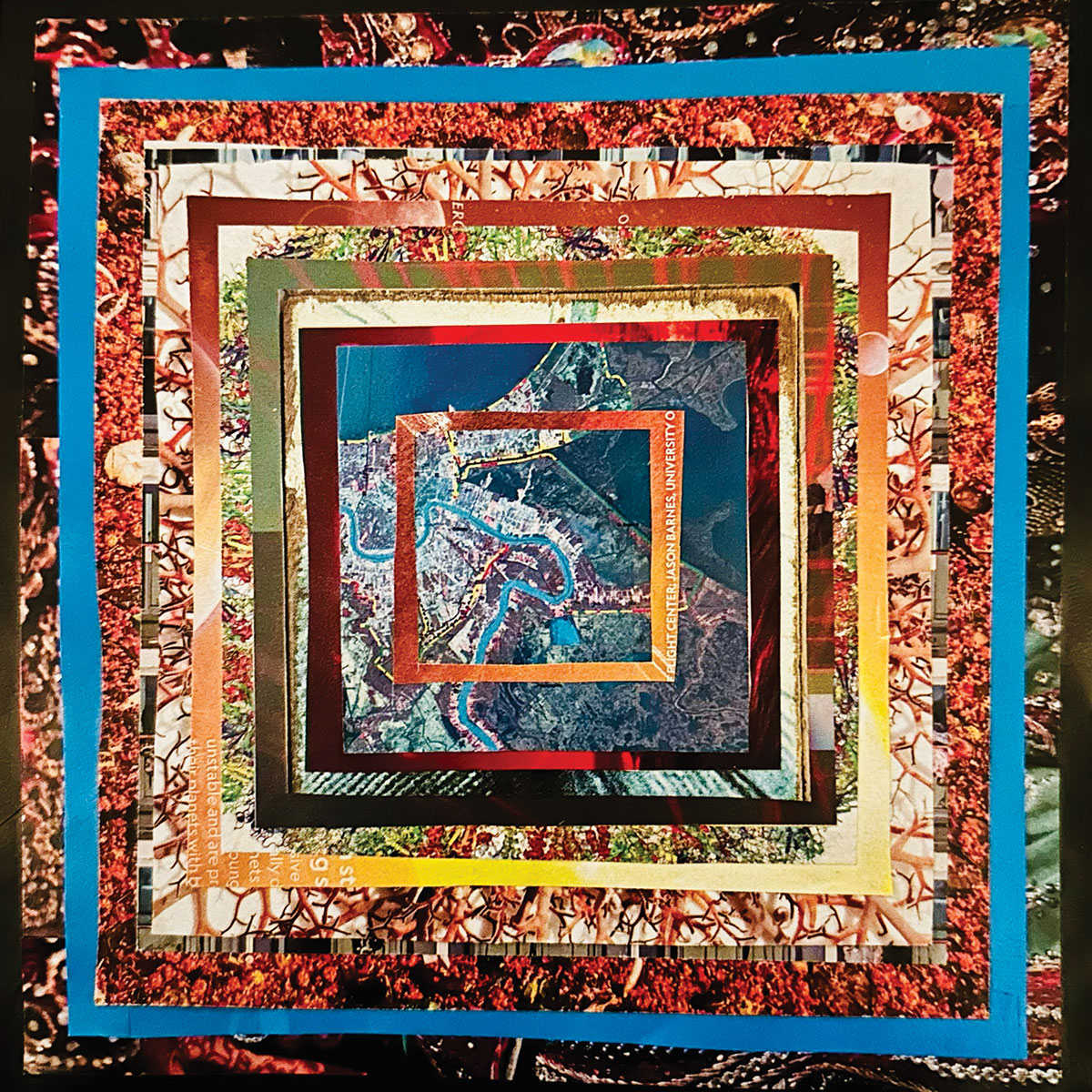
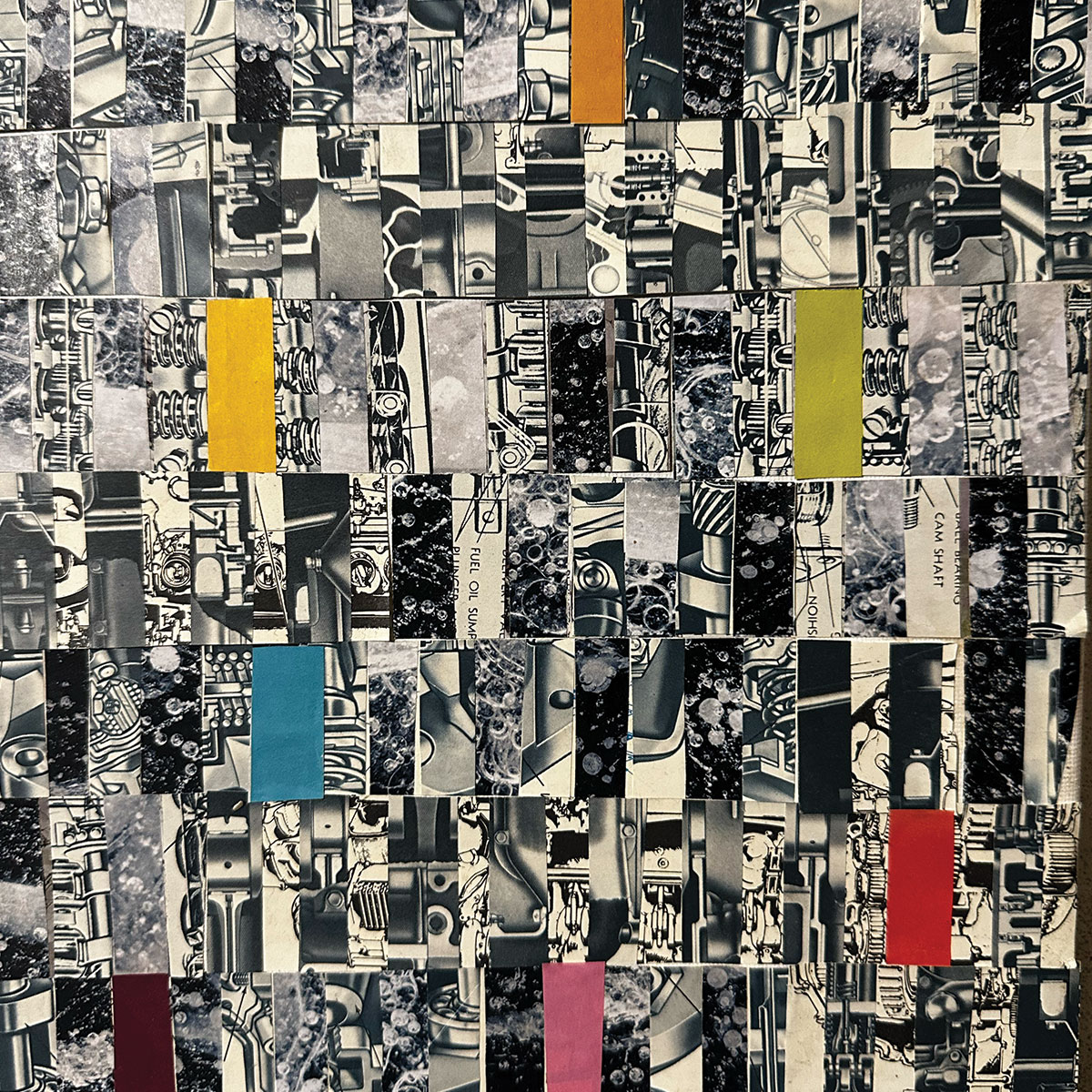
"Like an archeologist I hunt for the words that speak to me with new meaning. Intuitively, one word at a time, they turn into a kind of haiku or philosophical poetry that I can call my own.
"At some unpredictable point along the way, in my mind, the images start to invent themselves. Using colored vellums, graphite and or India ink to highlight or obscure my words; I create the image of that invention. Though I strive to make each document visually engaging I find it is the words that I value most."
—Will Ashford's Recycled Words
(via coudal)
Labels: Art, Literature
Monday, February 16, 2009

This weekend's NY Times magazine features a brilliant article by Michael Lewis that takes a look at the career of NBA forward Shane Battier, a player who on paper appears unremarkable: a low scorer with few rebounds or blocks to his name. But upon deeper investigation, by stepping outside of the normal stats and figures and looking at more abstract reports on player performance, what becomes remarkably clear is this one indisputable fact: when Battier is on the court, not only does his team play much better, but the opposing team plays much worse.
What Lewis determines through his article is that Battier is an unselfish player in a game that creates endless opportunities for selfish behaviour. He compares the game of basketball to that of baseball where, in contrast, the decision that is best for the single player is almost always best for the team. In basketball however, there is a far less defined path en route to scoring points. Decisions are made constantly fed more by ego than by strategy, more by contractual expectations than by rationale.
Battier plays a different game, one based on a sharp attention to detail, a cerebral understanding of opponents' behavior and a strict adherence to process. His decisions on the court are not influenced by anything outside of this process. He will ask not to start if it means that he will be on court more often against the player that he most needs to guard. The blocks he makes happen before the player he is guarding raises the ball above his shoulders and therefore do not statistically count. He will work tirelessly to keep a superstar like Kobe Bryant out of his shooting zone all evening with the knowledge that when the game is over, all his work will be lost in the statistics: Bryant will still be the game's leading scorer; but it will have taken him twice at many shots to get there.
This all got me thinking about how such a process could benefit the way that the teams that I work with interact. How many decisions are made every day in the design world for reasons outside of that strict adherence to process? How does ego or the simple need to "be billable" affect our behaviour? More importantly, how can I as an individual act unselfishly in order to improve the overall performance of my team?
Labels: Great Thinking, NY Times
Monday, February 09, 2009

"…the headquarters of CCTV, the Chinese television network, by Rem Koolhaas and Ole Scheeren, of the Office for Metropolitan Architecture—a building which I had thought was going to be a pretentious piece of structural exhibitionism—turned out to be a compelling and exciting piece of structural exhibitionism."
–Paul Goldberger, The New Yorker

"Word has it that the building is close to explosion. Whole thing pretty much toast, all in all."
–@DavidFeng
Labels: Architecture, Disasters, Signs of Our Time, Then and Now
![]()